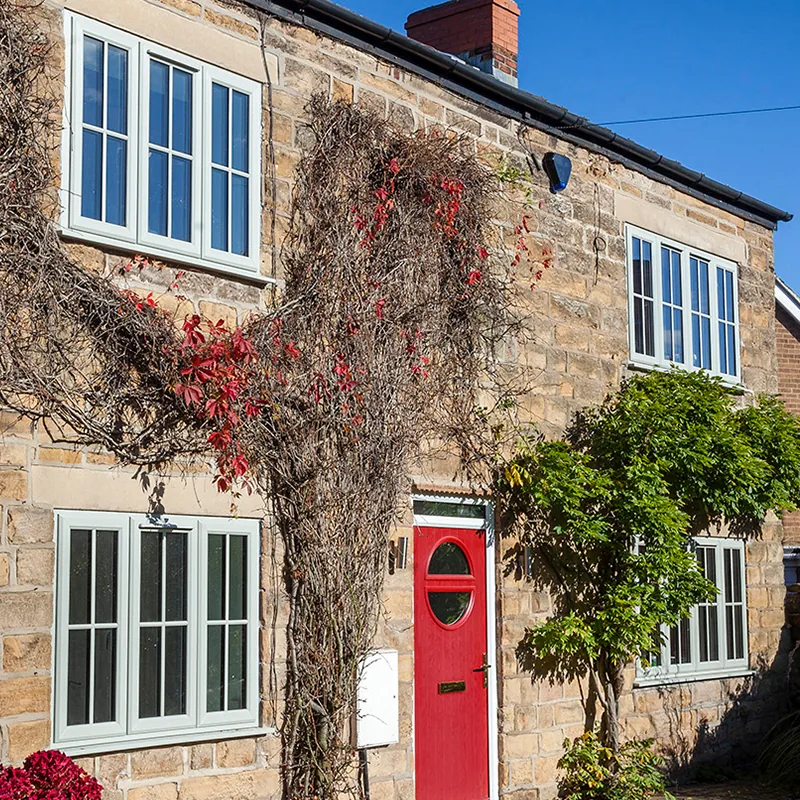
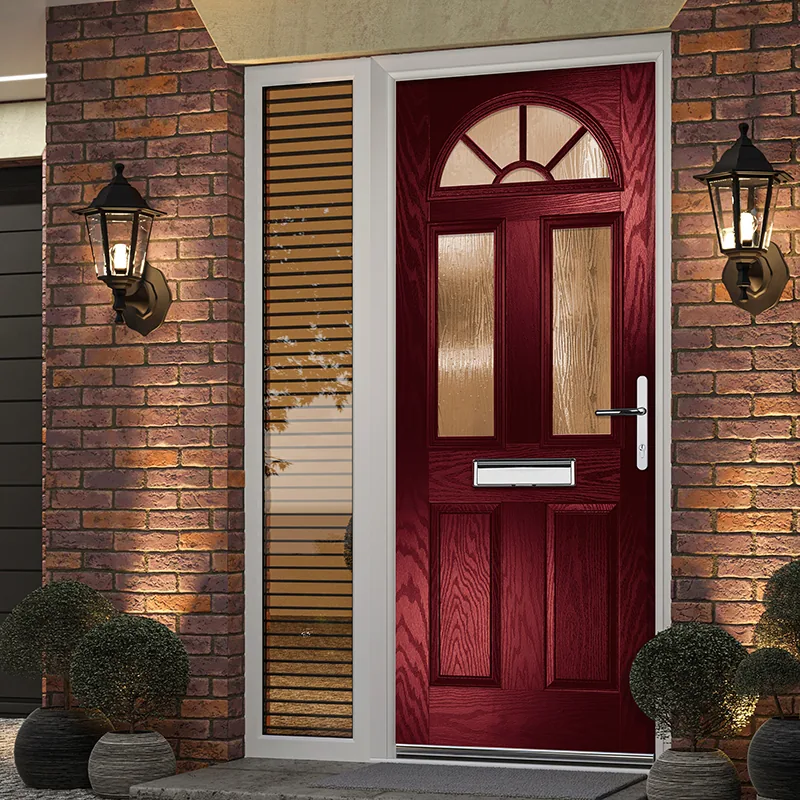
Your front door does a lot of work. It is the first thing visitors see, it keeps your home secure and it plays a big part in keeping the warmth in. When it is time to replace it, most homeowners end up choosing between two options: a composite door or a uPVC door.
Both are popular, and both can be the right choice. In this guide we give an honest comparison to help homeowners in Norwich and across Norfolk decide which suits their home and budget.
What is the difference?
Composite doors
Composite doors are made from a combination of materials. Typically, a solid insulating core is sandwiched between tough outer skins, often finished with a woodgrain texture. The idea is to combine the solid look and feel of timber with the low maintenance of modern materials.
uPVC doors
uPVC entrance doors are made from rigid uPVC frames, usually with reinforcement inside the profile, and an infill panel that may include glazing. They are lighter than composite doors and are often the more budget-friendly option.
Appearance and style
Composite doors are known for a more traditional, substantial look. The thicker leaf, woodgrain finishes and wide choice of colours make them very popular for period homes and for anyone who wants a real statement entrance.
uPVC doors have come a long way, and there are plenty of attractive styles and colours to choose from. They tend to have a slightly simpler look, which suits many modern homes perfectly well.
Our view: if kerb appeal is your top priority, a composite door usually has the edge. If you want a smart, practical door that matches your existing uPVC windows, a uPVC door can look great.
Security
Both types of door can be very secure when they are well made and properly fitted. Look for multi-point locking, a quality cylinder lock and strong hinges, whichever material you choose.
Composite doors have a thicker, more solid door leaf, which many homeowners find reassuring. With uPVC doors, the reinforcement within the frame and the quality of the locking system matter most. In both cases, the standard of installation is just as important as the door itself, as a poorly fitted door is weaker however good it is.
Insulation and comfort
A new door of either type will usually be a big improvement on an old, draughty one. Modern seals, a well-fitted frame and double-glazed panels all help reduce heat loss.
The solid insulating core in a composite door helps keep warmth in and also gives a reassuring, solid feel when you close it. uPVC doors also insulate well, particularly compared with older doors, though the thinner panels mean they generally do not feel quite as substantial.
Maintenance and durability
Neither door needs painting or treating like timber does. In most cases a wipe-down with warm soapy water and an occasional check of the hinges and locks is all that is needed.
- Composite doors: the tough outer skin is designed to resist weathering, warping and fading, and the thicker construction feels very solid over time.
- uPVC doors: durable and weather-resistant, and very easy to keep clean. As with any door, it is worth keeping the hinges and locks adjusted so it continues to close smoothly.
Cost
uPVC doors are generally the more affordable option, which makes them a popular choice for back doors, side doors and projects where budget is tight. Composite doors usually cost more because of their construction, but many homeowners feel the look and feel are worth the extra for the main entrance.
The final price for either type depends on the style, colour, glazing, hardware and any side panels or toplights. The best way to compare is to get a quote for both on the same specification.
Quick comparison
- Look: composite offers a more traditional, solid appearance; uPVC is clean and practical.
- Security: both can be very secure with multi-point locking and good fitting.
- Insulation: both are a big step up from old doors; composite feels more solid.
- Maintenance: both are low maintenance, with no painting needed.
- Budget: uPVC is usually cheaper; composite is an investment in kerb appeal.
Which should you choose?
Choose a composite door if you want the most solid, traditional-looking front door and are happy to invest a little more in your main entrance.
Choose a uPVC door if you want a reliable, secure and good-looking door at a lower cost, or if you are replacing a back or side door where looks are less important.
Many homeowners choose a composite door for the front of the house and a uPVC door for the back. You can compare our full range of doors to see what might work for your home.
Talk to a local door specialist
East Anglia Exteriors is a local, family-run company fitting doors across Norwich, Norfolk and the wider East Anglia region. We are happy to show you both options, talk honestly about what suits your property and give you a free, no-obligation quote.
Contact our team to book your quote, or try our online design tool to start designing your new front door.